
Vacuum conveying system
A vacuum conveying system is an efficient and enclosed solution for transferring powders, granules, and bulk materials from one process point to another using negative pressure. Tiermax vacuum conveying systems are engineered for reliable powder transfer and bulk material handling in food, pharmaceutical, chemical, plastics, battery, and other industrial applications.
By conveying material through a closed pipeline, the system helps minimize dust emissions, product loss, contamination, and operator exposure while providing flexible routing between process equipment.
Tiermax vacuum conveying systems are engineered around the specific characteristics of each product and process. They can be used to transfer bulk materials from bag discharging stations, bulk bag unloaders, hoppers, silos, drums, containers, and process equipment to mixers, reactors, blenders, sieves, weighing systems, dosing units, packaging machines, and storage vessels. Our dense phase vacuum conveying system is particularly suitable for fragile, abrasive, difficult-to-handle, or sensitive bulk materials where lower conveying velocity is required.
Vacuum conveying system - Benefits
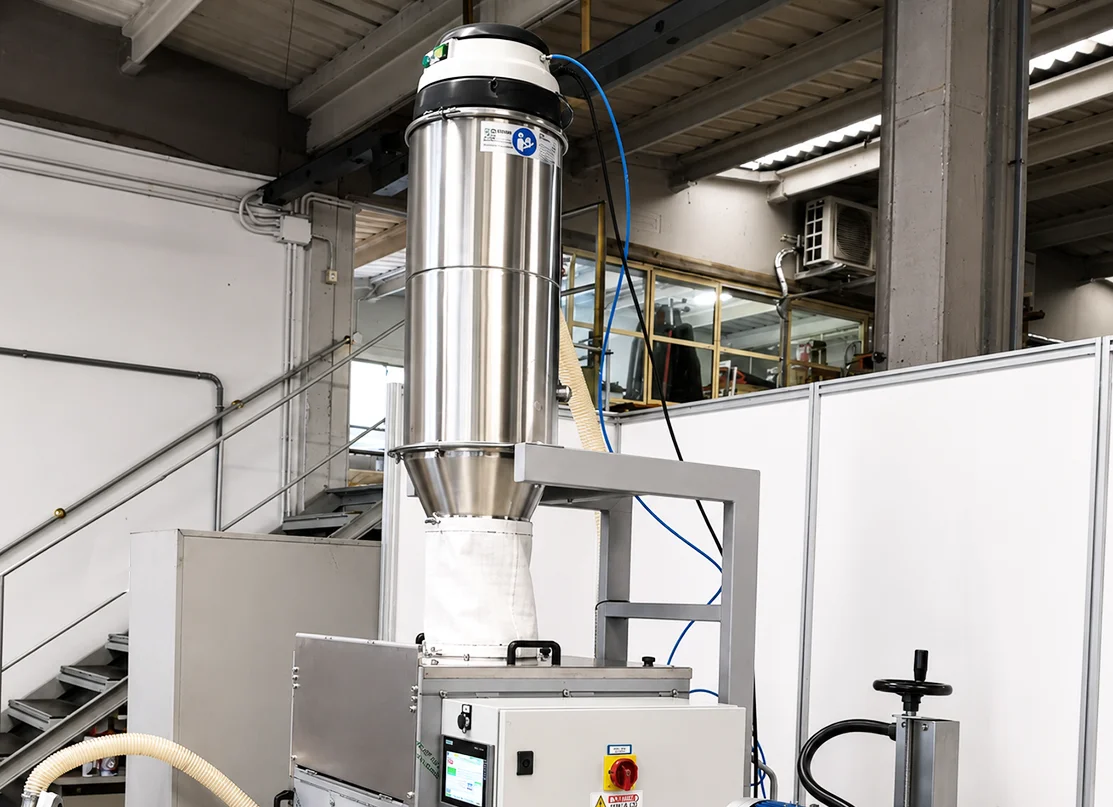
A vacuum conveying system provides a clean, efficient, and reliable method for transferring powders, granules, and other dry bulk materials. Its enclosed operation helps improve workplace conditions while supporting efficient and automated production processes.
Dust-Free Material Transfer −
The enclosed conveying pipeline minimizes dust emissions and product spillage, helping maintain a cleaner and safer working environment.
Reduced Product Contamination +
Flexible Installation +
Gentle Product Handling +
Improved Operator Safety +
Increased Process Efficiency +

Vacuum conveying system - Features
A vacuum conveying system provides a clean, efficient, and reliable method for transferring powders, granules, and other dry bulk materials. Its enclosed operation helps improve workplace conditions while supporting efficient and automated production processes.

- Dense Phase ConveyingLow-velocity transfer for gentle and controlled material handling.
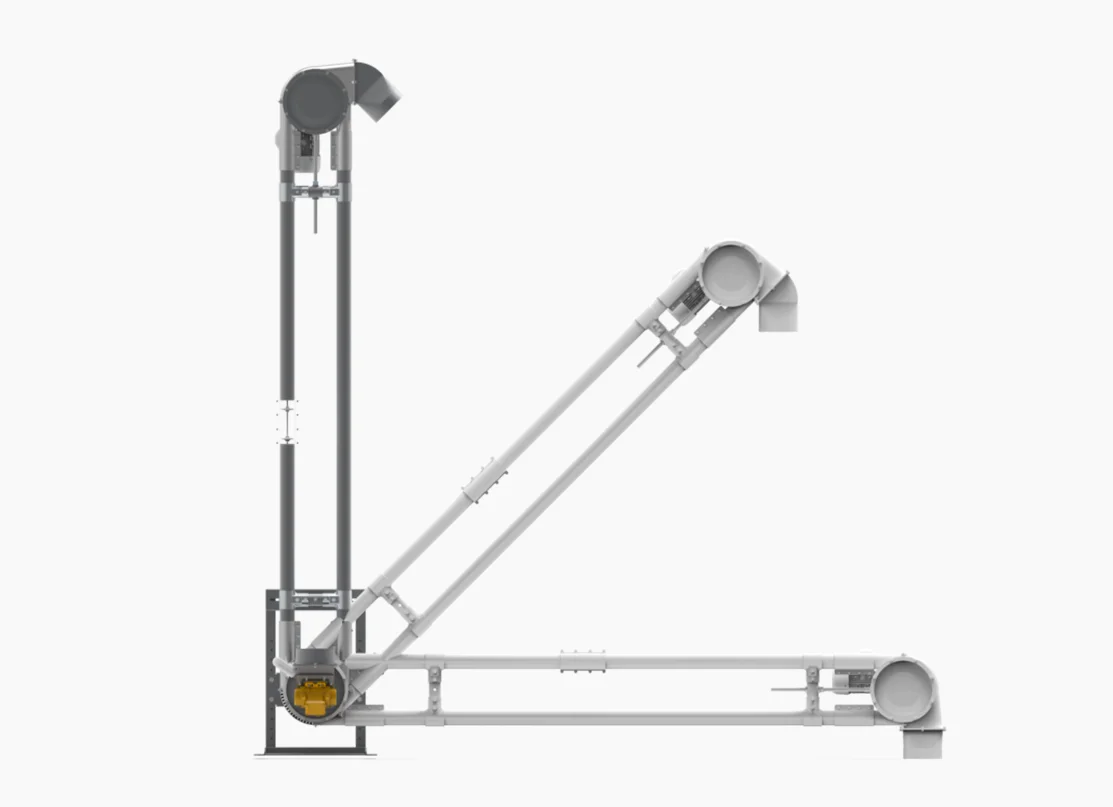
- Modular System DesignFlexible configuration for different capacities, distances, and layouts.
- Stainless Steel ConstructionAvailable in SS304L or SS316L for hygienic and corrosive applications.
- Integrated Weighing & DosingAccurate weighing and controlled material dosing can be integrated.
- Automatic ControlPLC-based automation for reliable and efficient system operation.
- Hygienic & EX DesignAvailable for hygienic processes and hazardous-area applications.
Frequently Asked Questions
A vacuum conveying system uses negative pressure to transfer powders, granules, pellets, and other dry bulk materials through an enclosed pipeline. It is commonly used to transfer materials between bag unloading stations, bulk bag dischargers, hoppers, mixers, reactors, sieves, and other process equipment.
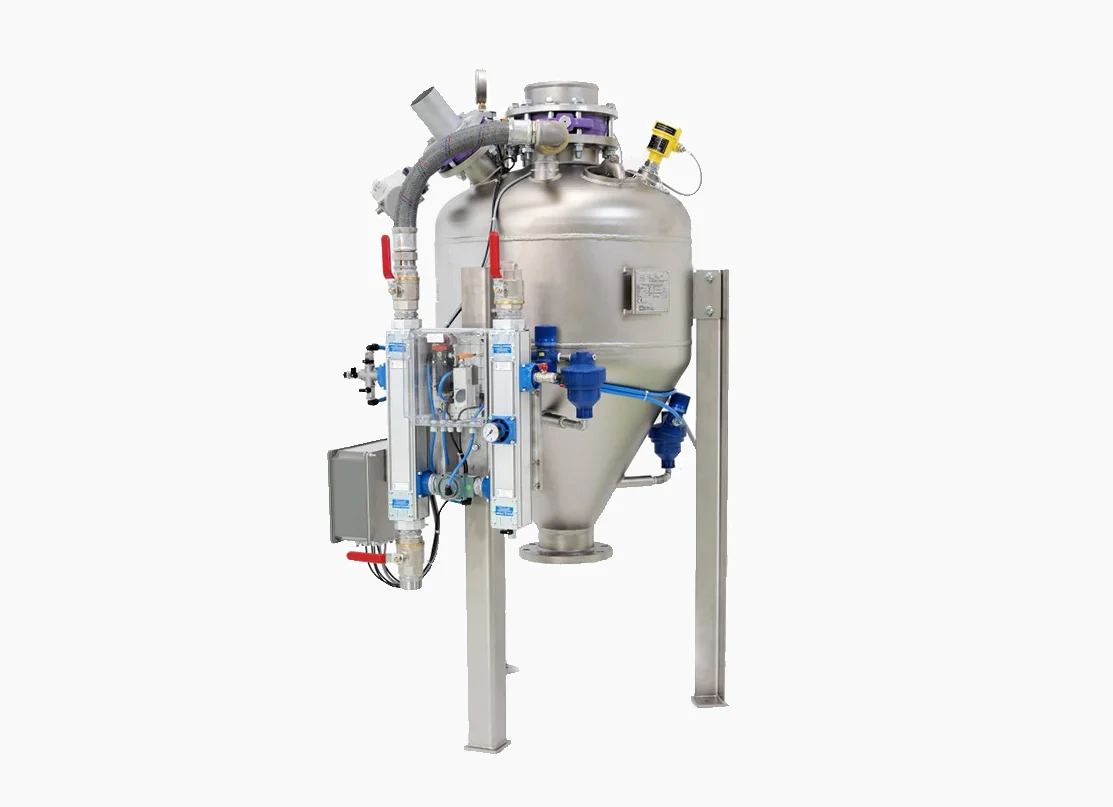
A vacuum source creates negative pressure inside the conveying line, drawing material from the pickup point through the pipeline into a vacuum receiver. The material is separated from the conveying air and then discharged into the downstream process equipment.
A vacuum conveying system pulls material through the pipeline under negative pressure, while a pressure conveying system pushes material using positive pressure. Vacuum systems are often preferred for shorter to medium conveying distances, multiple pickup points, and applications requiring good containment. Pressure conveying is often more suitable for longer distances, higher capacities, and applications feeding multiple destinations.
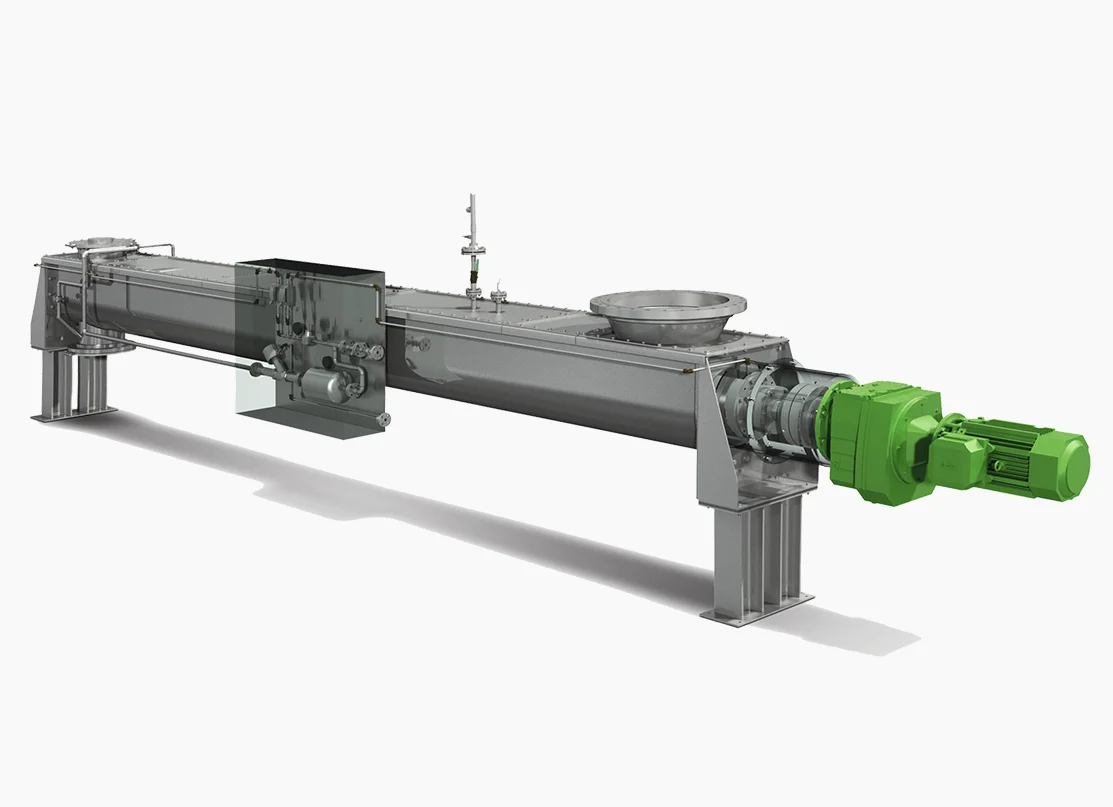
The best solution depends on the application. Vacuum conveying provides enclosed, flexible pipe routing and is well suited for transferring powders vertically or around existing equipment. A screw conveyor is a simple and robust mechanical solution, particularly for short, fixed conveying distances, but normally offers less routing flexibility.
Vacuum conveying systems can handle a wide range of powders, granules, pellets, and bulk solids, including food ingredients, pharmaceutical powders, chemicals, plastic granules, minerals, and other industrial materials. System selection depends on bulk density, particle size, flowability, abrasiveness, fragility, moisture, and other material characteristics.
Dilute phase conveying moves material at relatively high air velocity and lower material concentration. Dense phase vacuum conveying operates with a higher solids concentration and generally lower conveying velocity, which can help reduce particle degradation and pipeline wear for suitable products.
Yes. A properly designed dense phase vacuum conveying system can provide lower conveying velocities, helping reduce damage to fragile particles and limiting wear when handling abrasive materials. The final design should always be based on the specific material characteristics.
Selecting the correct system requires evaluation of the material characteristics, bulk density, particle size, required capacity, horizontal distance, vertical lift, pipeline routing, pickup and discharge points, hygiene requirements, and hazardous-area classification. Tiermax evaluates these parameters to engineer a vacuum conveying system according to the specific process requirements.