

Abrasive Powder Classification: Achieving Precise Particle Size with Vibrating Sieves
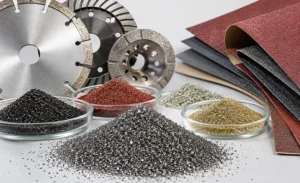
Abrasive powders used in grinding, polishing, cutting, and surface-finishing applications require a carefully controlled particle size distribution. Materials such as diamond powders and other high-performance abrasives can contain a wide range of particle sizes after crushing and milling, making accurate classification an important part of the production process.
Effective vibrating sieving and classification helps manufacturers obtain consistent abrasive grades, remove unwanted coarse particles and excessive fines, and improve the repeatability of downstream manufacturing processes.
Why Particle Size Matters in Abrasive Powders
The performance of an abrasive product is strongly influenced by the size and consistency of its particles.
Oversized particles may cause excessive material removal, scratching, or an inconsistent surface finish. At the other end of the distribution, excessive fine particles can reduce cutting efficiency, increase dust generation, and affect the behavior of abrasive mixtures.
By controlling these fractions, manufacturers can achieve a narrower particle size distribution and produce more consistent abrasive products for demanding finishing applications.
Classification After Crushing and Milling
Crushing and milling processes typically generate particles across a relatively broad size range. A classification stage can therefore be installed downstream to separate the material into the required fractions.
Depending on the process, a vibrating sieve can be configured to:
- Remove oversized particles and agglomerates
- Separate excessive fine material
- Recover the required product fraction
- Produce multiple particle-size fractions in a single operation
- Handle fine and superfine abrasive powders
- Improve batch-to-batch product consistency
For applications requiring several fractions, multi-deck vibrating sieves can classify material into different particle-size ranges within one machine.
Screening Fine and Superfine Abrasive Powders
Classification becomes increasingly challenging as particle size decreases. Fine powders may have lower flowability and can create mesh blinding, reducing screening efficiency and capacity.
The screening system therefore needs to be selected according to the required cut size, particle characteristics, throughput, number of fractions, and powder behavior.
Conventional circular vibrating sieves can provide an effective solution for many abrasive powder applications and can be configured with different mesh-cleaning systems to maintain screening performance.
For particularly demanding fine-powder applications, multifrequency screening technology can provide an additional option. These systems are designed for difficult powder classification and can accommodate very fine meshes; specialized industrial designs can operate with mesh openings extending down to approximately 10 µm, depending on the material and application.
Protecting Product Quality
Abrasive powders can themselves cause significant wear to processing equipment. Appropriate equipment construction is therefore important for maintaining reliability and limiting contamination.
Depending on the application, screening systems can incorporate:
Wear-resistant construction: Materials and components can be selected according to the abrasiveness of the powder.
Stainless-steel contact parts: Product-contact areas can be manufactured from suitable stainless-steel grades where cleanliness and contamination control are important.
Mesh-cleaning systems: Balls, under-mesh cleaners, self-vibrating elements, or automatic cleaning solutions can help reduce mesh blockage.
Multiple screening decks: Different fractions can be separated simultaneously when tighter particle-size control is required.
Easy-cleaning construction: Accessible internal surfaces help simplify cleaning between different abrasive grades.
Selecting the Right Vibrating Sieve
There is no single sieve configuration suitable for every abrasive powder. The optimum solution should be based on the actual characteristics of the material and the required final product.
Important parameters include feed particle-size distribution, target cut size, bulk density, particle shape, abrasiveness, required capacity, number of fractions, moisture content, flowability, and installation conditions.
For very fine or difficult powders, material testing may be recommended before final equipment selection. Testing can help determine the appropriate mesh size, vibration technology, screening area, number of decks, and mesh-cleaning method.
Benefits of Controlled Abrasive Powder Classification
An appropriately designed screening system can provide:
- Consistent Particle Size – Maintain a narrow and repeatable abrasive grade.
- Improved Surface Finish – Reduce unwanted coarse particles that may cause scratching.
- Better Cutting Performance – Control excessive fines that can negatively affect abrasive efficiency.
- Reliable Production – Maintain consistent powder characteristics between production batches.
- Flexible Classification – Produce one or multiple particle-size fractions according to process requirements.
- Downstream Protection – Remove unwanted particles before mixing, forming, coating, or tool manufacturing.
TIERMAX Abrasive Powder Screening Solutions
TIERMAX provides vibrating sieving and classification solutions for abrasive and specialty powders, from conventional circular vibrating screens to advanced fine-powder classification systems.
Each system can be configured according to the abrasive material, target particle-size range, required capacity, number of fractions, installation arrangement, and downstream process.
For challenging applications, material testing can also be considered to verify screening performance and determine the most suitable equipment configuration before final system design.

Let's discuss your project
Our team of experts are ready to help find you solutions tailored to your specific needs.
Related Products

Powder Classification Sieve for Accurate Grading
The Powder Classification Sieve is designed to accurately separate powders and granules into homogeneous particle size fractions, ensuring…
read more ›
Dedusting Sieve
A Dedusting Sieve is a high-performance vibrating screening system that removes unwanted fine particles and dust from powders…
read more ›
Powder Safety Sieve
A Powder Safety Sieve is a high-performance vibrating screening system designed to remove oversized particles, foreign contaminants, and…
read more ›