

Vibrating Sieving for Fruit Juice Processing
Vibrating sieving provides an effective solution for controlling pulp, fibres, skins, and other suspended solids during fruit juice production. By integrating a suitable vibrating sieve between the fruit press and downstream clarification equipment, producers can achieve more consistent juice quality while reducing the solids load on centrifuges and other processing equipment.
Controlling Solids After Fruit Pressing
Freshly pressed juice typically contains varying amounts of pulp, fruit fibres, skins, and other suspended particles. Depending on the fruit and final product requirements, some of these solids must be removed before the juice proceeds to clarification and finishing.
Without effective separation, excessive solids can overload centrifuges and decanters, contribute to plugging or imbalance, increase equipment wear, and make it more difficult to maintain the required juice clarity and texture.
Installing a vibrating sieve as an intermediate filtration stage provides better control over the solids entering downstream processes.
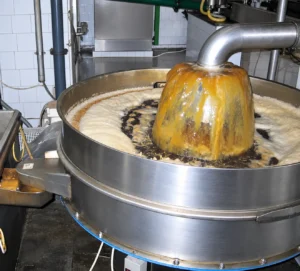
Sieving Before Centrifugation
A vibrating sieve designed for liquid filtration can be positioned directly after the fruit press and before the centrifuge. At this stage, coarse pulp and fibrous particles are retained by the screen while the juice and acceptable fine solids pass through.
Removing oversized material before centrifugation helps stabilize the solids load entering the centrifuge and reduces the risk of operational problems associated with excessive pulp or fibrous material.
The mesh opening and sieve configuration can be selected according to the required pulp level, fruit characteristics, production capacity, and desired final product quality. This makes vibrating sieving suitable for a wide range of juices, including citrus, apple, berry, tropical fruit, and blended products.
Effective Screening of Fibrous Pulp
Fruit fibres and stringy particles can accumulate on conventional screening surfaces, reducing the open screening area and limiting throughput.
For these applications, vibrating sieves can incorporate dedicated mesh-cleaning systems designed for fibrous products. These systems continuously support the screening process by reducing pulp accumulation and keeping the mesh surface active.
This can help maintain consistent throughput, minimize mesh blinding, extend continuous operating periods, and reduce the need for frequent manual cleaning.
Gentle Processing of Juice
Fruit juice filtration requires effective separation without unnecessarily affecting the characteristics of the product.
Controlled vibration provides sufficient energy to separate and transport retained solids toward the oversize outlet while allowing the juice to pass efficiently through the screen. Proper configuration can also help limit excessive turbulence, air incorporation, and foam formation during processing.
For hygienic applications, stainless steel construction with food-grade finishes provides suitable product-contact surfaces and facilitates cleaning between production runs. Equipment configurations can also be adapted to the cleaning procedures used within the processing facility.
Supporting Reliable Juice Production
Adding a vibrating sieving stage before centrifugation can improve both product consistency and process reliability. By controlling the size and quantity of solids entering downstream equipment, producers can achieve a more stable and manageable production process.
Key benefits include:
- Effective removal of coarse pulp and fibres
- Reduced solids load on centrifuges and decanters
- Improved protection of downstream equipment
- Better control of juice texture and clarity
- Reduced risk of plugging and unplanned downtime
- Easier cleaning and maintenance
- Flexible operation across different fruits and recipes
Tiermax Vibrating Sieving Solutions
Tiermax provides vibrating sieving and liquid filtration solutions for fruit juice processing, including technologies from MLT Cuccolini. Systems can be configured according to fruit type, fibre content, required separation size, throughput, cleaning requirements, and the layout of the existing production line.
Integrating a compact vibrating sieve between the press and centrifuge provides an effective way to control pulp and fibrous solids while supporting reliable downstream operation and consistent juice quality.
Contact Tiermax to discuss your fruit juice processing application and identify a vibrating sieving solution suited to your throughput, product characteristics, and separation requirements.

Let's discuss your project
Our team of experts are ready to help find you solutions tailored to your specific needs.
Related Products

Solid-Liquid Separation Sieve
A Solid-Liquid Separation Sieve is a high-performance vibrating filtration system that continuously separates suspended solids from liquid streams.…
read more ›
Powder Safety Sieve
A Powder Safety Sieve is a high-performance vibrating screening system designed to remove oversized particles, foreign contaminants, and…
read more ›
Viscous Liquid Filtration Sieve
A Viscous Liquid Filtration Sieve is a high-performance vibrating filtration system specifically designed to remove oversized particles, agglomerates,…
read more ›Frequently Asked Questions
Vibrating sieving removes coarse pulp, fibres, skins, seeds, and other unwanted solids from pressed juice. This helps control the solids content, improve juice consistency, and protect downstream processing equipment.
A common installation point is after the fruit press and before the centrifuge or decanter. At this stage, the sieve removes oversized pulp and fibrous material before the juice enters downstream clarification equipment.
Mesh size depends on the type of fruit, pulp and fibre content, required juice texture, throughput, and downstream process requirements. Different screen sizes can be selected depending on how much pulp should remain in the juice.
Fruit fibres can accumulate on the screening surface and reduce capacity. Vibrating sieves can therefore be equipped with dedicated mesh-cleaning systems that help keep the screen open, maintain consistent throughput, and reduce the need for frequent manual cleaning.
Pre-screening helps reduce the solids load entering the centrifuge, lowering the risk of plugging, imbalance, excessive equipment wear, and unplanned downtime. It also provides better control over juice clarity and texture while supporting more stable and consistent production.